Article
Managing Risks of Drones
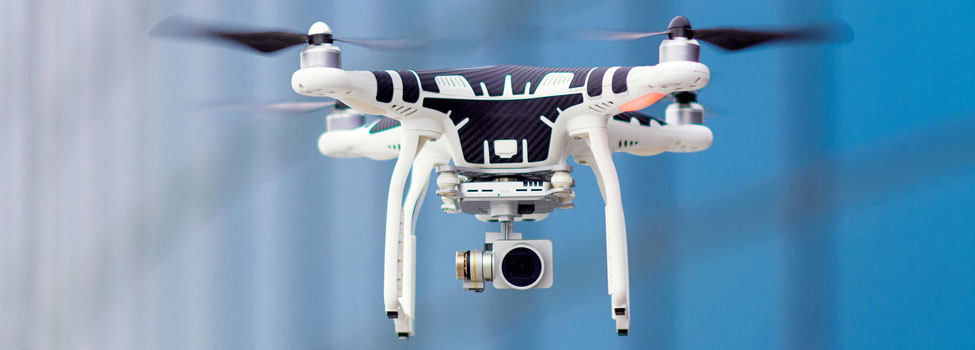
Drones (unmanned aerial systems) have the ability to aid government entities in many ways: bridge and ditch inspection, mapping, surveillance, and search and rescue, to identify a few. As with any technology, managing the risks of drones is key.
For example, a drone could:
- Strike property and damage it. Worst-case scenario, the drone could collide or interfere with a piloted aircraft.
- Open the government entity to a suit alleging invasion of privacy if it is used for surveillance, mapping or inspection.
- Subject the entity to potential fines and penalties if it is not operated pursuant to state and federal regulations.
Drones may assist in conducting government business such as mapping, surveillance, and search and rescue, but there are risks to their use that members should manage before and during operation.
Drone Regulations
Commercial and local government drone use is regulated by the Federal Aviation Administration (FAA), which has issued guidelines for drone usage. Members are responsible for complying with all applicable FAA rules and regulations, including obtaining a Part 107 remote pilot certificate or an FAA Certificate of Authorization (COA). A member’s drone use must follow FAA regulations for MCIT coverage to apply.
Develop Policies for Use
Any government entity that seeks to operate drones should create appropriate policies and procedures regarding their use. The entity should also consider identifying operator qualifications to ensure that the operators are fully versed in the appropriate federal and/or state regulations.
Law Enforcement Use
In addition to Minnesota Department of Transportation aircraft rules in Chapter 360, members should be aware of Minnesota Statutes, Section 626.19 that addresses law enforcement use of drones. The law covers authorized uses, limitations on use and required policies and documentation.
Renting, Contracting Considerations
If a government entity leases—rather than owns—the drone and operates it, the entity still needs to obtain the appropriate authority to operate it. Government entities also need to ensure that private commercial drone operators contracting with the entity also comply with FAA regulations.
The government entity should pay special attention to contractual insurance requirements, specifically whether the policy covers aviation activity or whether specialty coverage should be required.
The entity should also ensure that the defense, hold harmless and indemnification provisions are broad enough to address the unique risks associated with drone use and that all risks are appropriately transferred to the private operator.
MCIT Coverage and Drone Use
For MCIT coverage to apply, drones must be: 1) owned by the member; 2) scheduled under the MCIT Coverage Document; and 3) operated by a covered party in compliance with FAA regulations. A member employee who pilots a drone as part of their duties on behalf of the member is a covered party per the MCIT Coverage Document. Occasionally, members contract with other entities or organizations to use shared pilots who are not member employees. Drone pilots who are not member employees may not qualify as covered parties, which could negate drone coverage.
Members should contact their risk management consultant if the organization plans to use nonemployee pilots to fly drones scheduled with MCIT.
MCIT drone coverage would respond as follows for covered losses.
- Property: MCIT provides coverage for physical damage to a member’s drone under miscellaneous personal property. A $1,000 deductible applies.
- General liability: Claims for property damage and bodily injury caused to others are subject to a $2,500 deductible.
- Public employees liability: MCIT provides coverage for claims alleging wrongful acts (violation of civil rights) arising from a member’s use of a drone. This coverage is subject to standard exclusions, such as claims alleging an intentional, malicious or criminal act. A $2,500 deductible applies.
Generally, failure to operate the drone pursuant to FAA regulations or for personal use jeopardizes MCIT coverage.
Agricultural Drones
Soil and water conservation districts’ drone usage has expanded to large agricultural drones capable of carrying seed and spray for agricultural applications. In addition to the coverage considerations noted above, use of agricultural drones have additional coverage implications.
MCIT’s liability coverage excludes claims resulting from the actual, alleged or threatened discharge, dispersal, seepage, migration, release or escape of pollutants, including but not limited to chemicals. MCIT’s herbicide/pesticide application coverage endorsement provides limited coverage for application of herbicides and pesticides; however, arial operations are excluded in this endorsement.
Claims resulting from the use of drones to spray chemicals, herbicides or pesticides are likely not covered.
Plan Ahead to Manage Risks
Drone technology may provide efficiencies and benefits to government entities, but failure to manage the risk could have potentially significant risks. Government entities should ensure operators have the requisite skills and training and always comply with applicable rules and regulations, as well as carefully consider coverage for their operations.
Topics